
AI search visibility
Small businesses should not treat AI crawler controls as a simple allow-or-block switch. In 2026, the better decision is to separate search discovery, user-triggered assistant access, and model-training reuse, then monitor what each choice does to visibility.
What changed in July 2026?
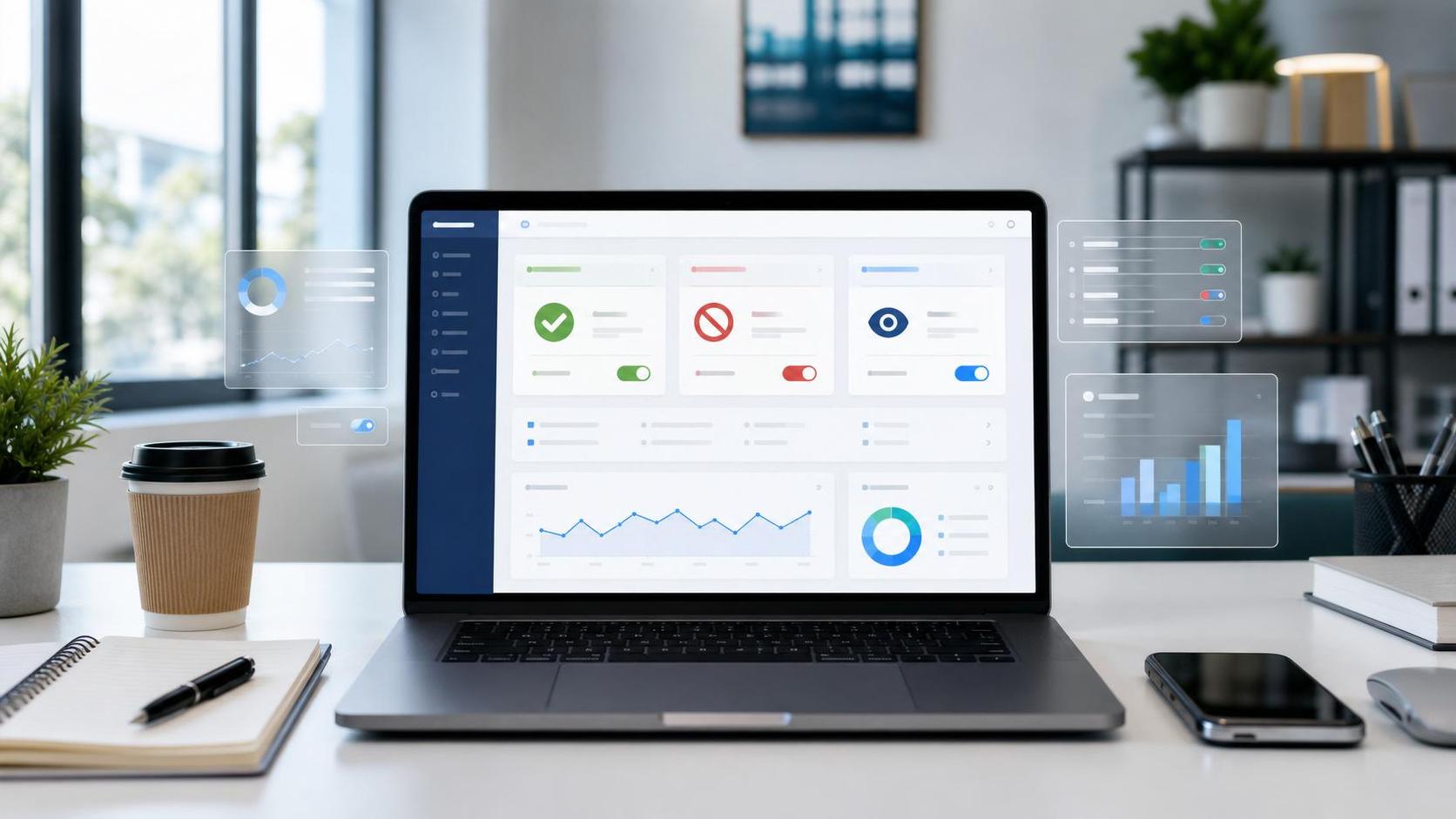
On 1 July 2026, Cloudflare announced finer AI traffic controls for all customers, including free-tier users. Instead of treating every AI-related visitor as one category, Cloudflare described three practical use cases: search, agent and training. That distinction matters because a small business may want search inclusion, may cautiously allow assistant actions that help real customers, and may still choose to restrict content reuse for model training.
Cloudflare also warned that multi-purpose crawlers can be hard for site owners to evaluate because one crawler may support search, assistant functions and training at the same time. The company said operators should separate those purposes so website owners can understand why a crawler is visiting and manage access more transparently.
This does not mean every small business should copy a publisher’s content-protection strategy. A local service company, consultant, ecommerce brand or specialist B2B firm usually earns value from being found. The goal is controlled visibility: protect valuable content without accidentally closing the doors that help customers discover the website.
The practical decision framework
What to allow, block or monitor
| Traffic type | Typical small-business setting | Why it matters | What to measure |
|---|---|---|---|
| Traditional search crawlers | Allow for public pages that should rank. | Search discovery still drives service enquiries, local visibility and product research. | Indexed pages, crawl stats, impressions, clicks and local query coverage. |
| Image, video and shopping crawlers | Allow where images, products, videos or local proof help buyers evaluate the business. | Rich results and visual discovery can influence trust before a visitor contacts you. | Image/video impressions, media indexing, product visibility and page engagement. |
| AI answer and citation surfaces | Allow important informational pages, then improve clarity and evidence. | Bing’s AI Performance reporting shows how pages are cited in supported AI experiences. | Cited URLs, grounding query phrases, page-level citation activity and assisted conversions. |
| Model-training crawlers | Consider blocking or limiting if the content has independent commercial value. | Training access may not send referral traffic and may reuse original work outside the site owner’s control. | Bot volume, unchanged-page re-fetching, server cost, and referral value from each operator. |
| User-triggered assistant agents | Monitor first; allow only where the customer benefit is clear. | Agents may fetch pages on behalf of a real user, but they can also stress forms, booking tools or gated resources. | Form quality, conversion paths, failed submissions, rate-limit events and suspicious behaviour. |
Why blocking everything is risky
A blanket block can feel clean, but it creates a visibility risk. Google’s crawler documentation says preferences addressed to Googlebot affect Google Search and related search features. Google also documents Google-Extended as a separate control token for managing use in Gemini-related training and grounding, and says that Google-Extended does not affect inclusion or ranking in Google Search.
That separation is important. A company that wants to remain visible in Google Search should not casually block Googlebot. A company that wants to limit some AI reuse can review controls such as Google-Extended, Cloudflare’s AI traffic options or other platform-level settings without assuming every bot rule has the same effect.
Bing’s AI Performance announcement adds another measurement angle. Microsoft said the report helps site owners see when pages are cited in AI-generated answers, which URLs are referenced and how citation activity changes over time. If your website blocks the wrong traffic, that visibility may never appear in your reporting.
A safer rollout for small-business websites
- Classify public content. Split pages into commercial service pages, local pages, advice articles, tool pages, legal pages, media files and any sensitive resources.
- Protect private or low-value URLs first. Admin paths, staging content, internal PDFs, duplicate archives and thin taxonomies should not be left open just because the homepage is public.
- Keep the money pages discoverable. Pages such as small business website design, SEO and GEO optimisation and local service pages need search access if they are expected to generate enquiries.
- Use specific controls where possible. Prefer purpose-specific settings over broad blocks. A rule aimed at training reuse should not accidentally remove the site from search, image search or AI citation reporting.
- Measure for at least two to four weeks. Compare Search Console data, Bing Webmaster Tools data, server logs and enquiry quality before tightening rules again.
How this connects to GEO
Generative Engine Optimisation is not only about being crawlable. AI search systems need clear entities, useful structure, current facts, evidence and pages that answer real buyer questions. A crawler policy can open or close the door, but the content still has to deserve citation.
For most small businesses, the best sequence is: fix crawlability, strengthen the page structure, add useful schema where it matches visible content, improve evidence and sources, then measure AI visibility. The schema markup guide, the AI crawler access explainer and the Bing AI visibility measurement guide cover the deeper technical layers.
Recommended policy by business type
| Business situation | Recommended stance | Reason |
|---|---|---|
| Local services and trades | Allow search and AI answer discovery for service, FAQ and location pages; restrict only private resources. | Visibility and trust usually matter more than content reuse risk. |
| Consultants and specialist B2B firms | Allow public expertise pages, but review training access for proprietary frameworks and downloadable assets. | Thought leadership brings leads, while original methods may need protection. |
| Publishers and high-volume content sites | Use stricter AI traffic controls and evaluate compensation or licensing options. | The content itself is the product, so uncompensated reuse can directly reduce value. |
| Ecommerce and product catalogues | Keep product and image discovery open; monitor scraping, price-copying and bot load. | Search visibility helps sales, but repeated automated fetching can create operational cost. |
Sources and further reading
- Cloudflare: new AI traffic options for Search, Agent and Training crawlers.
- TechCrunch: Cloudflare’s policy shift and the September 2026 mixed-use crawler deadline.
- Google crawling documentation: Googlebot, GoogleOther and Google-Extended.
- Bing Webmaster Blog: AI Performance in Bing Webmaster Tools.
FAQ
Should a small business block AI crawlers?
Usually not as a blanket rule. A small business should keep important public pages discoverable, then selectively restrict training reuse, sensitive assets, duplicate archives or areas that create bot load without customer value.
Does blocking Google-Extended remove a site from Google Search?
Google’s crawler documentation says Google-Extended is a standalone product token for Gemini-related training and grounding controls and does not affect inclusion or ranking in Google Search. Blocking Googlebot is different and can affect Google Search visibility.
How long should crawler policy changes be tested?
Use at least a two-to-four-week measurement window for most small-business sites. Check crawl reports, impressions, AI citation data where available, referral quality, form submissions and server-load changes before tightening rules further.
Can TrendTransformers help decide the right crawler policy?
Yes. TrendTransformers can review crawl settings, Search Console data, Bing visibility signals, structured data, content gaps and service-page intent as part of SEO/GEO optimisation or a focused website visibility audit.
Need a clean crawler and AI visibility policy?
TrendTransformers helps small businesses keep useful pages discoverable while reducing avoidable technical risk. Start with a focused SEO/GEO review, then decide which crawler controls belong on the website.
Contact TrendTransformers or review the AI marketing workflow support service.