
Conversion strategy · ecommerce
Making an account compulsory before payment can solve an internal process problem while creating a customer problem. The better default is usually simple: let the buyer complete the purchase, then offer an account when it gives them a clear benefit.
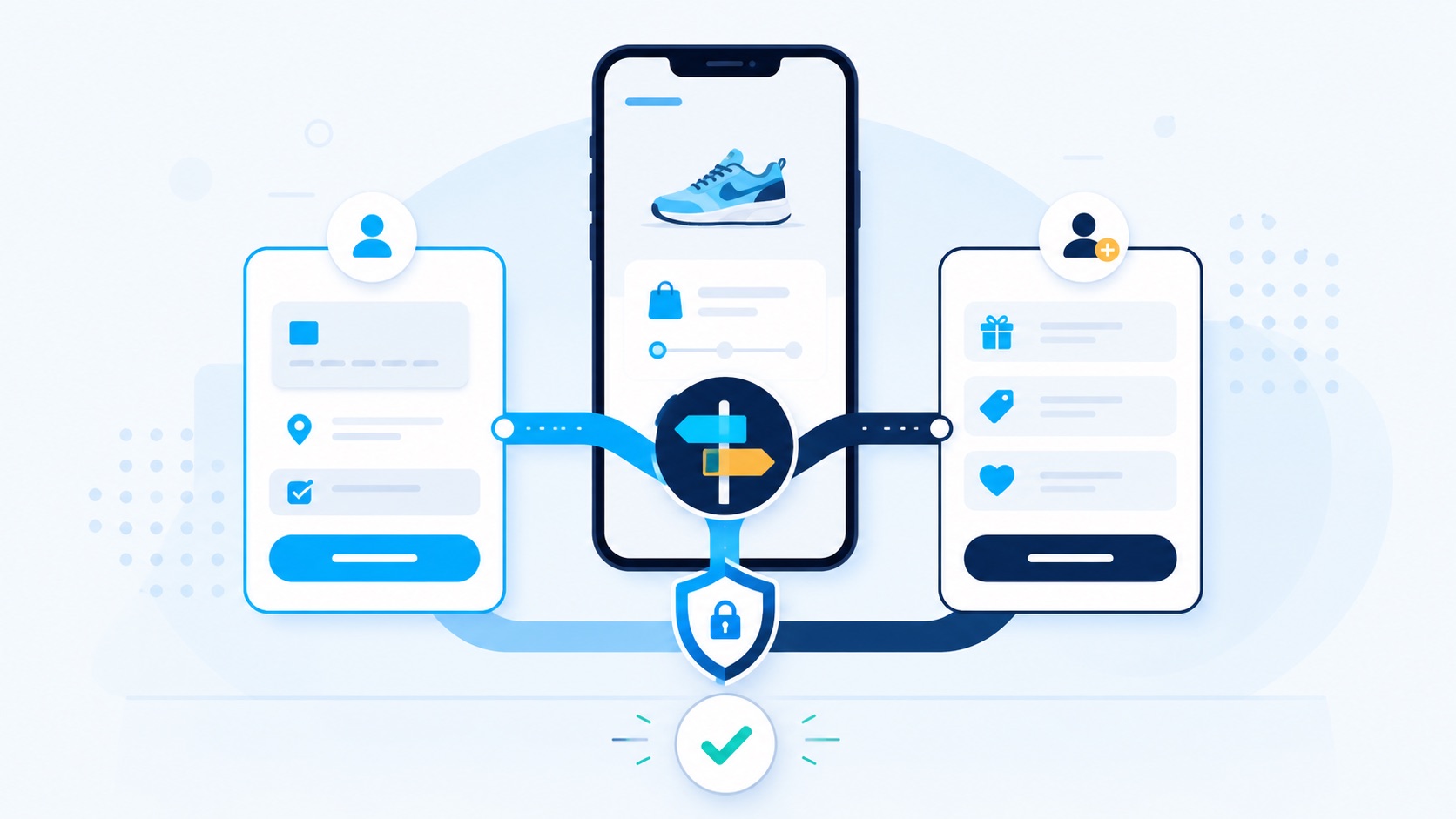
Checkout is the moment when a visitor moves from interest to commitment. That makes every extra requirement expensive: it can create doubt, introduce another password task or make a first-time buyer feel that the shop is asking for more than the purchase requires.
Recent Shopify guidance still lists forced account creation among common checkout friction points. That does not make accounts always wrong. It does create a useful design question: what does the customer receive in return for creating one now?
Use the “purchase first” decision
Start with the job the account must do. Then choose the least demanding flow that still lets the business deliver it well.
Can this order be fulfilled without a persistent account?
If the buyer can receive a receipt, delivery updates, returns support and a secure payment confirmation by email, offer guest checkout. Collect only the order information you need. A new customer should not have to invent credentials just to buy a standard product.
Does an account unlock a benefit the buyer can use immediately?
Ask at checkout only when it enables something concrete: a subscription dashboard, licence access, saved wish lists, a B2B approval process, repeat ordering or a member-only service. State that value next to the choice. A vague promise of “faster next time” rarely earns the extra step on a first purchase.
Could the account be offered after payment instead?
For many stores, this is the cleanest compromise. After a successful guest order, offer a password setup that attaches the order to an account. The purchase is already safe; the customer can decide without fearing that another form will derail it.
Are you mistaking an internal preference for a customer need?
Customer records help support and marketing, but that does not automatically justify a forced account. Use order email, consent-aware communication and a clear post-purchase invitation before adding a barrier to the payment route.
Two checkout patterns, two different outcomes
Pattern A: the first-time purchase
A shopper finds a product from a mobile search, checks the delivery cost and wants to pay. The purchase can be fulfilled with a name, address, payment and email receipt. Guest checkout is the appropriate primary path. Offer account creation on the confirmation screen, framed around tracking and simpler returns—not a demand that arrives before payment.
Pattern B: the continuing service
A client is buying a software subscription, booking a recurring service or managing orders for a team. An account may be necessary, but the page should say why before the form: access to invoices, shared approvals, saved service details or a subscription area. The account is part of the service, not an unexplained hurdle.
Do not use “more options” as a substitute for clarity
Payment and identity preferences vary by market and device. Stripe’s analysis of almost 20,000 businesses notes that mobile and local payment methods affect customer behaviour. That is a reason to test your own flow, not to add every possible choice. A checkout that offers guest payment, a well-explained account option and familiar payment methods can be both simpler and more trustworthy than a busy page full of competing routes.
Before changing a checkout, inspect it on a phone and ask one person outside the team to buy a low-value product. The useful observation is not whether they finish eventually. It is where they hesitate, what they assume will happen to their data and whether they understand the next step.
Measure the trade-off without sacrificing orders
- Record the current baseline. Track checkout starts, completion rate, payment failures, support contacts and repeat purchase over a meaningful period.
- Separate first-time and returning buyers. Returning customers may value saved details; a first-time buyer has not yet earned that confidence.
- Test one change at a time. For example, change compulsory registration to guest-first plus a post-purchase invitation. Keep price, delivery messaging and payment methods stable while you compare.
- Check the downstream result. Look at completed orders, avoidable support work and repeat purchasing—not account sign-ups alone. An account count is not a conversion outcome.
If the wider journey needs attention, website creation and improvement can make the route from product discovery to payment clearer. For a review that connects conversion friction to customer acquisition, see TrendTransformers’ services.
Frequently asked questions
Is guest checkout safe?
It can be, provided the store uses a secure payment flow and collects the information needed to fulfil and support the order. A guest order does not remove normal fraud, payment or data-protection responsibilities.
When should an ecommerce site require an account?
Require one when it is genuinely needed to provide the product or service, such as a subscription area, licensed digital access, team approvals or a member-only service. Explain the benefit before asking the customer to register.
Will optional accounts reduce repeat purchases?
Not necessarily. Measure repeat purchase and account adoption after offering account setup once the first order is complete. A lower-friction first purchase can create the trust needed for a later account.
What is the first checkout metric to review?
Start with the completion rate for first-time mobile buyers, then watch payment errors and support contacts. Those measures show whether a design change removed a real barrier.
Sources
Make the route to purchase easier to trust
TrendTransformers can review the mobile journey, proof and conversion friction that stand between an interested visitor and a completed order.