
AI commerce and website strategy
A product feed can now power ChatGPT ad campaigns, but OpenAI’s beta documentation makes one boundary unusually clear: being eligible for those ads does not put a product into organic ChatGPT conversations. Retail teams should treat paid feed readiness and organic product discovery as two connected, but separate, jobs.
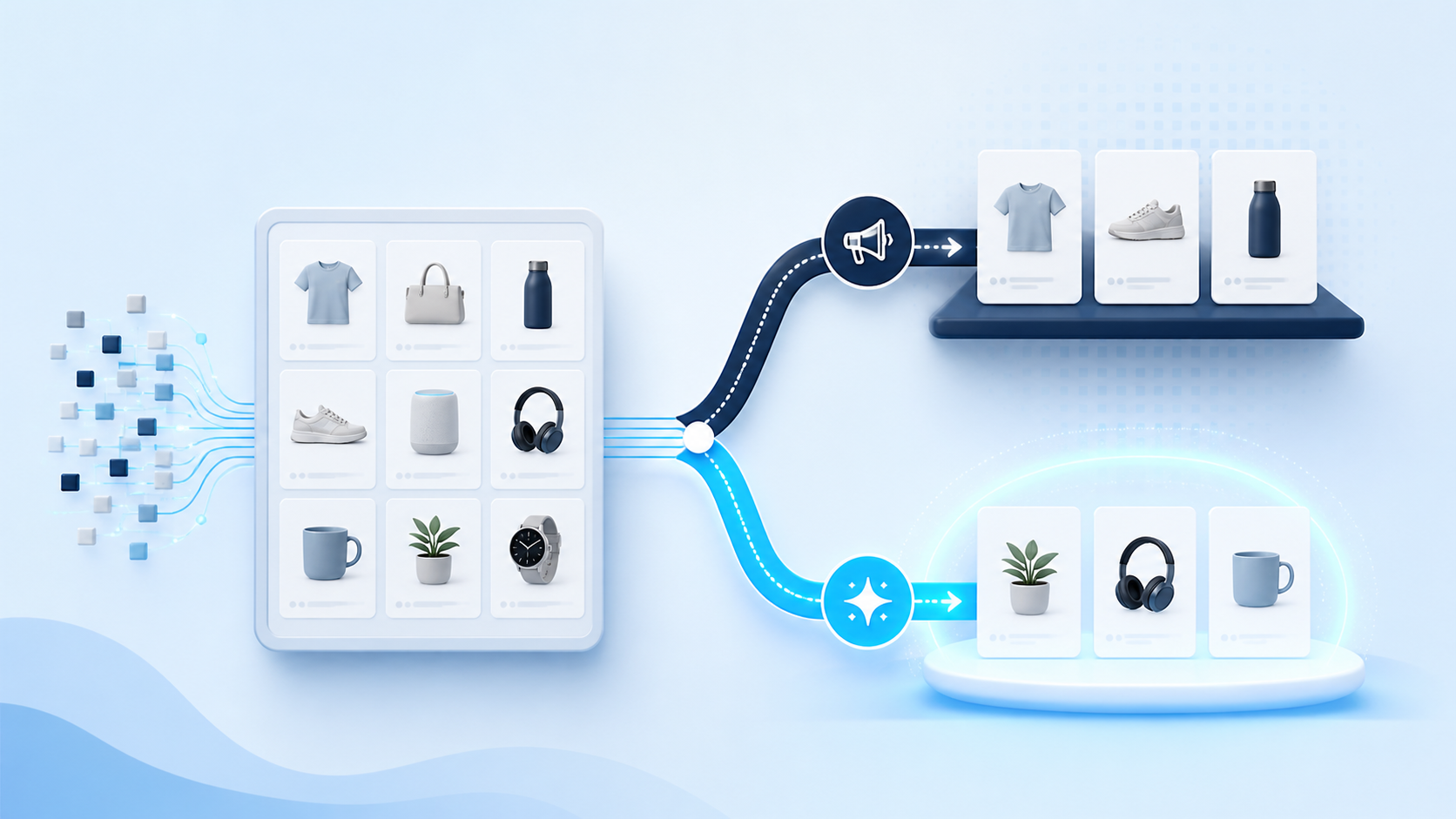
Quick answer: use a product feed when you are eligible for ChatGPT’s feed-based ad beta and need to keep paid catalogue details current. Do not treat that feed as an organic-visibility shortcut. For organic product discovery, keep the product page itself accurate, accessible and decision-ready; for paid activity, validate feed fields, landing pages and campaign measurement separately.
The useful distinction: product data can serve different jobs
OpenAI’s recently updated guidance describes product-feed campaigns as a beta advertising format for retail advertisers with broad or frequently changing catalogues. The same guidance says that products from a feed are eligible for ads during the beta, not for organic ChatGPT conversations. That is not a technical footnote. It changes the order in which a retailer should make decisions.
Paid feed campaign
The feed is campaign infrastructure. Its immediate job is to supply product details, images, landing pages and eligibility information for ads. Success should be judged through the campaign’s delivery and conversion evidence.
Organic product discovery
The product page and the wider web presence remain the source material a shopper can inspect. Success is not guaranteed by a feed upload; it depends on relevance, accuracy, availability and whether the product information helps a real comparison.
Why “we uploaded the feed” is the wrong stopping point
A catalogue can be technically valid and still create a weak customer journey. An ad may send a shopper to a thin page, an unavailable variant, a confusing delivery policy or a price that no longer matches the page. Separately, a well-written product page may be useful in organic discovery but have no relationship at all to a paid feed campaign.
The practical risk is assigning one team a vague goal called “ChatGPT visibility”. It mixes media buying, merchandising, site maintenance and organic content into one number that nobody can act on. Split the work first, then reconnect it around the landing page and eventual sale.
| If the question is… | Start with… | Do not assume… |
|---|---|---|
| Can this item run in a feed-based ad? | Feed specification, item eligibility, campaign and ad-group setup. | That it will appear in organic ChatGPT answers. |
| Will a shopper understand and trust the offer? | The live product page, price, availability, delivery, returns and images. | That a technically accepted feed fixes unclear on-page information. |
| Did the work create commercial value? | Landing-page sessions, add-to-cart activity, checkout starts and completed orders. | That impressions alone mean a useful customer journey. |
A five-check handoff from catalogue to customer
This is a short operating sequence for a retailer considering the beta. It deliberately begins before campaign creation, because the site is where the promise is tested.
Decide whether the immediate objective is paid product promotion, stronger product information, or both. Budget and conversion tracking belong to the first route; product-page improvement belongs to the second.
Check the product name, price, stock state, variants, images, delivery timing and returns policy. Open the pages on a phone and follow the purchase path as a buyer would.
Use the same product identifiers and make sure titles, images, availability and landing URLs do not contradict the page. A current feed cannot compensate for a stale destination.
Write a specific description, show the product’s useful constraints, and make the retailer identity and policies easy to find. Avoid vague superlatives that a buyer cannot verify.
Compare clicks with product-page engagement, cart activity, checkout starts, orders and cancellations. Investigate a mismatch before increasing spend.
What a decision-ready product page should make explicit
For a simple commodity, the basics may be enough. For a higher-consideration purchase, shoppers need fewer claims and more decision facts: exact model or service variant, dimensions or compatibility where relevant, price and currency, stock or delivery timing, return conditions, warranty and clear retailer contact details.
Those details support more than one channel. They reduce paid-traffic waste, help customer service answer fewer avoidable questions and give search visitors a page worth visiting after a summary or comparison. They also make it easier to spot a genuine data-quality problem when a feed and a page disagree.
Important limitation: OpenAI says product results and merchant rankings can use multiple signals and may evolve. No feed, page structure or campaign guarantees placement, sales or a particular organic result. The durable priority is accurate information and a landing page that fulfils the expectation created before the click.
Where website and SEO work still matter
Product-feed advertising does not replace ordinary website hygiene. Indexable product pages, stable canonical URLs, useful internal category links, fast mobile pages and clear policy pages still determine whether a shopper can continue their decision confidently. The same foundations also make catalogue maintenance less fragile when prices, stock or ranges change.
For a retailer with an established shop, the next sensible step is usually a focused audit of ten high-value product pages rather than a site-wide rewrite. Fix information gaps that block a purchase, then test whether the feed reflects those pages. TrendTransformers can help connect website creation and maintenance with SEO and GEO optimisation so the technical, content and conversion checks reinforce each other.
Frequently asked questions
Does a ChatGPT product feed make products appear in organic ChatGPT conversations?
No. OpenAI’s current beta guidance says products in these feeds are eligible for ads, not organic ChatGPT conversations. Treat paid feed setup and organic product discovery as separate workstreams.
Who is the product-feed ad beta most relevant for?
It is aimed at retail advertisers with broad or frequently changing product catalogues. A small service business without a product catalogue is usually better served by accurate service pages, proof and a clear enquiry route.
What should be checked before launching a feed-based campaign?
Check product identifiers, titles, images, availability, prices and landing URLs against the live pages. Then test the mobile purchase path, delivery information, return policy and conversion tracking.
What should a retailer measure after launch?
Measure beyond impressions: review landing-page engagement, add-to-cart activity, checkout starts, completed orders, cancellations and customer-service issues that reveal an information mismatch.
Sources
Need product pages that support real buying decisions?
TrendTransformers can review your ecommerce journey, clarify the information that shoppers need and build a practical SEO, content and conversion roadmap.